BLOG
Why winning doesn’t tell the whole story, how to connect before you correct, and why your team’s culture starts with you.
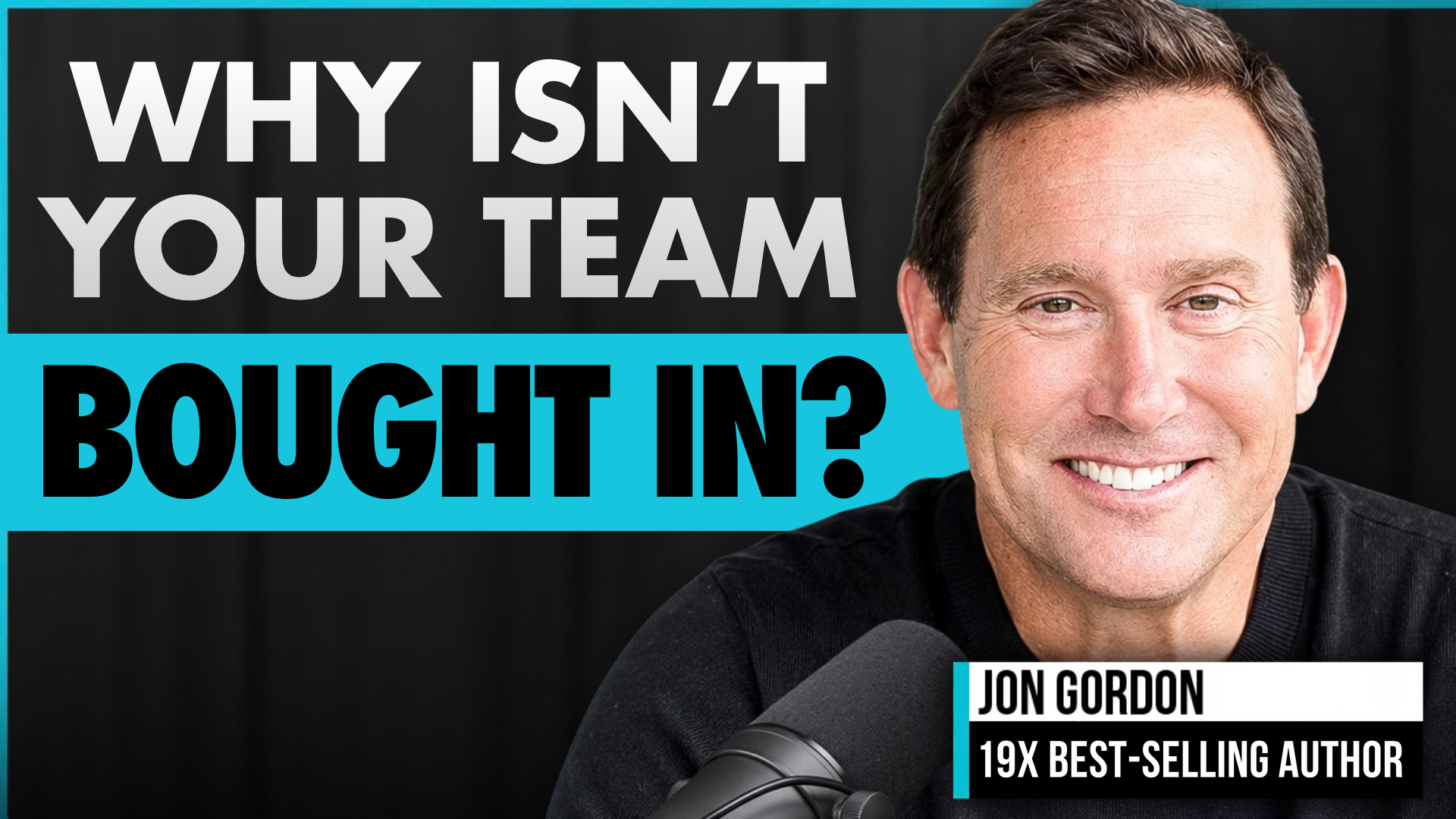
It’s football season. Every weekend from now through the Super Bowl, we get to watch the greatest athletes in the world compete at the highest level. But what’s happening on the field is more than entertainment. It’s a chance to see how culture leads to greatness, no matter the final score.
Jon Gordon has spent years behind the scenes of corporate boardrooms and NFL locker rooms. He’s helped teams in both build cultures that lead to extraordinary results. He’s written 19 bestsellers, including The Energy Bus and his latest, The Power of Positive Habits. He joined me on the Learn-It-All podcast to talk about how leaders build winning teams and motivated cultures.
Here are my top takeaways from Jon Gordon.

Jon hosts a training camp for some of the best coaches in the world. The room is a who’s who of leaders who have celebrated immense success. If you follow sports (and even if you don’t), you probably know their names: Sean McVay, Kevin O’Connell, Tony Dungy, Billy Donovan.
Every one of them is still taking notes. Despite their success, they each had their notepads out to learn from each other. Growth doesn’t have a fixed end or a trophy. It’s something you work on consistently.
After Donovan finished his own talk, he asked if he could stay and watch the other speakers. Erik Spoelstra greets Jon with the same question every time: what are you hearing out there?
Jon describes it as a mix of humility and hunger. “There’s a humbleness, but there’s a hunger to improve and grow and get better.” The best leaders will learn from anyone and listen to anyone if they believe that person can make them better.
Humility and hunger need to be courted and cultivated. Great leaders learn to carry both. Humility reminds you that you’re never finished. Hunger keeps you moving forward.
Your Move: This week, ask someone outside your team the Spoelstra question: “What are you learning out there?” Then take notes.

“Winning is not always evidence of your culture,” Jon says. A team can stack wins while it splinters inside. Another team can lose games, or a company can fly under the radar, and still have a culture that brings out the best in everyone.
So when a culture is struggling, Jon looks first at buy-in and ownership. If they’re missing, he’s clear about the cause: “It’s always because of the leader. So it always starts with you.”
From there, a leader rethinking their culture has to ask themselves two questions. In Jon’s words: “What kind of culture do I want to create? What kind of team do I want to build?”
Then it’s about how you get your people on that bus with you.
When Sean McVay took over the Rams, they were coming off a 4-12 season. McVay and Jon spent six hours at the Fairmont hotel building what the culture needed to look like on paper. The core values. The sayings. The beliefs. “We not me” became a centerpiece of the culture McVay built. The Rams had a winning next season and eventually won a Super Bowl.
Jon knew the culture had taken hold when Odell Beckham Jr., who joined the team mid-season, stood on the sideline yelling the team’s core value: “We not me.”
Everything you want to build depends on creating the right culture first. As Jon puts it, “Once you build the culture, the culture builds everything else.”
Your Move: Answer three questions on paper. Why is my culture where it is? What culture do I want to create? How do I get my team on the bus?

No matter how good the technology gets, people will always be the engine of your organization. AI is powerful, but it can’t make up for a team that’s disconnected and mistrusting. You can spend millions on frontier technology. If the people using it aren’t connected and moving in the same direction, the investment gets wasted and the gap gets exposed.
Jon is direct about it. “AI right now cannot be fully trusted.” What you can trust is the person using it. That’s why he believes “human intelligence is going to be so much more important than that digital intelligence.”
Human intelligence shows up most in how you give feedback. Great cultures make feedback both safe and expected. But feedback requires a foundation of trust. Jon’s rule for building it: connect before you correct.
“If you try to correct before you connect, you’re going to get burnout instead of buy-in,” he says. When people know you care about them, “you will then earn the right to challenge them.”
Jon learned this the hard way at home. When his daughter was a young athlete, he corrected her constantly. She quit. He changed, became an encourager, and stopped correcting all the time. She came back to the sport and took off her junior year.
Now he uses a simple question with her: "Do you want dad hat or coach hat?” Dad hat is “all love, all support, all encouragement.” Coach hat means advice and constructive criticism. She decides which one she gets.
As a leader, creating connection is your first job. Your people are dealing with more pressure and more hours alone with a screen. And as Jon says, “AI will never love you.”
Your Move: Before your next piece of critical feedback, connect first. Then ask the person what they need from you right now: support or coaching. Let them choose the hat.
Jon is no stranger to negativity. By his own admission, his college teammates would tell you he was "a mental wreck." About 25 years ago, his negativity nearly cost him his marriage. That’s what led him to do this work.
In 2001, after reading that “you can’t be stressed and thankful at the same time,” he started taking a daily walk of gratitude. That one habit changed the course of his life.
Then he learned to become his own greatest encourager. You’d never tell a struggling friend to give up, so don’t say it to yourself either.
The key is understanding that you can’t always control your first thought. First thoughts are often automatic, the product of years of negative thinking. Jon’s advice: “You don’t have the power of the first thought, but you have the power of the second thought.” Don’t fight the first one. Win the next one.
You can’t pour into your team from an empty tank. Leading others starts with how you talk to yourself.
Your Move: Take one 10-minute walk this week and name what you’re thankful for. When a negative first thought shows up, answer it the way you’d answer a friend.
Jon calls this the hardest habit in his book. It’s also the most powerful.
At 31, he wanted to write, but he felt blocked. So he went to see the biological father who left when he was a year old, and he forgave him. Jon didn’t do it for his father. He did it for himself. When he got home, he started writing. Thirty-three books and more than six million copies later, he says, “I had to let go of the old in order to create the new.”
That old battle had been holding him back. As Jon puts it, “Don’t let old battles keep you from new victories.”
And the speed matters. “The faster you forgive, the sooner you start growing.”
You can forgive someone and still keep your distance. Jon has no relationship with his father to this day. He just stopped carrying the weight.
Your Move: Name one old battle you’re still fighting at work. Decide this week to put it down. You can forgive without condoning.
The Power of Positive Habits holds 93 habits. That can feel like a lot. Jon’s goal is simple. He hopes “that you’ll find one in the book. Just one that will change your life, elevate your life, and help you elevate others.”
His method: read through, write down every habit that resonates, then “narrow it down to the three top ones that you know you want to implement and then start with one.”
Habit change is hard. Jon’s fix is what he calls the habit before the habit: “anything that removes resistance.”
Going to the gym in the morning is the habit. Laying out your gym clothes the night before is the habit before the habit.
Flossing is the habit. Leaving the floss next to your toothbrush is the habit before the habit.
It works at work too. Want to encourage your team more? Write down three names tonight. Tomorrow morning, they’ll be waiting for you.
Building a new habit is only half the work. Jon says that if he could add one more habit to the book, it would be to get rid of your worst habit.
“We all got a habit that’s holding us back and you need to get rid of it.”
His is cursing on the pickleball court. His friends finally told him why they kept laughing. They’d been reading The Energy Bus for Kids to their children.
If the author of The Energy Bus is still working on his worst habit, you can work on yours.
The last habit in the book, number 93, is to create an amazing funeral.
Jon asks, “What do you want people to say at your funeral?” He pictures a packed room. People having a blast and telling stories about you. Thrilled that you lived, because you made a difference in their lives.
“Those stories are actually the legacy that you have left.”
Your culture works the same way. Your team will tell stories about how you led them. The habits you practice today decide what those stories say.
I like to say that learning without doing is treason. So here’s my challenge for this week:
Which habit are you starting, and which one are you quitting? Drop a comment. I'd love to hear what you're working on.
Subscribe to The Learn-It-All Podcast


Want our articles in your inbox? Sign up for our blog newsletter to never miss out!