Right Skills. Right Now.
Flexible learning solutions designed to empower organizations to thrive today and prepare for tomorrow.

Taught live (on-site & virtually)

Business apps & soft skills

Flexible learning solutions designed to empower organizations to thrive today and prepare for tomorrow.
The best companies in the world invest in people development. These are a few of the ones we help.


We help your workforce do their best work
Enable your team to thrive alongside the evolution of the workforce.

A training program that is exactly what you need
We help you create a program focused on your reality – addressing the exact challenges and opportunities you face. Our expert team will help you create solutions that are practical and simple. We will also help you implement them.
How we help organizations
An experience that fits the learner
Everyone has a unique learning style. We offer a blend of live and on-demand training, Q&A, peer discussions, bite-sized learning, and much more to create an engaging learning experience.
Engaging facilitators will upskill your team
World-class instructors will guide participants through interactive learning sessions that will combine lectures and discussions. Each class is two-to-three-hours long to ensure that all employees can make time for it no matter how busy they are.


From building resilience to mastering Excel
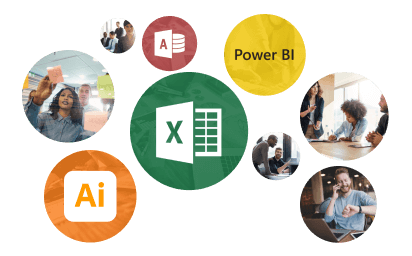
Soft skills such as critical thinking, complex problem-solving, resilience, flexibility, creativity, originality, initiative, and emotional intelligence in combination with required technical skills such as excel, SQL and Sharepoint, are what will help your organization reach new heights. Find courses for all at Learnit.

We offer a wide range of courses and programs to help you upskill, reskill, increase employee engagement and invest in high potential team members.
Build a learning culture
Our training is always relevant to real-life situations. We enable all participants to learn to learn, utilize new knowledge immediately, connect with others in similar situations and grow as individuals.

Our classes are hands-on, fun, entertaining and highly interactive.
Our attendees commented with the words like great, awesome, thanks, excellent, helpful, effective, and best.
Our knowledgeable and innovative learning strategists will discuss the learning & development goals of your team and work with you to reach a successful solution
Already know what you're looking for? Click the link below to
book a meeting with a learning strategist.
You can also easily reach one of our learning strategists by calling the number below.